
In short
- Wipe daily with warm water, mild detergent and a soft cloth along the grain, then rinse and dry. Dry steel stays bright, and standing water leaves marks.
- Never use chlorine bleach, steel wool or abrasive pads. They cause the pitting and scratches that rust starts from.
- In a humid or coastal kitchen, rinse salt off every week and treat brown tea staining early. Near the sea, ask about SS316.
Why stainless steel stains
Stainless steel resists rust because it contains chromium, which forms a thin, invisible film on the surface. The film repairs itself as long as air reaches it and the surface is clean. Rust appears when the film is broken or buried: by scratches, by chlorides (salt, bleach and some sanitisers), by food left standing, or by particles of ordinary steel stuck to the surface.
So good care means keeping the steel clean, dry and unscratched. Our made-to-order equipment is food-grade SS304 as standard, in a brushed, mirror or satin finish, with seams welded and ground smooth, which also makes it easier to wipe clean.
Daily and weekly cleaning
| When | What to do |
|---|---|
| Every day | Scrape off food. Wash with warm water, mild detergent and a soft cloth or sponge. Rinse with clean water and wipe dry, especially around sinks, taps, seams and feet. |
| Every week | Degrease hoods, table edges and shelving with a kitchen degreaser used as its label says, then rinse and dry. Clean behind and under equipment. Near the sea, rinse the whole surface with fresh water. |
| Every month | Check welds, seams, corners and feet for rust-coloured marks or pooled water. Clean any mark at once, and check that the adjustable feet are dry and level. |
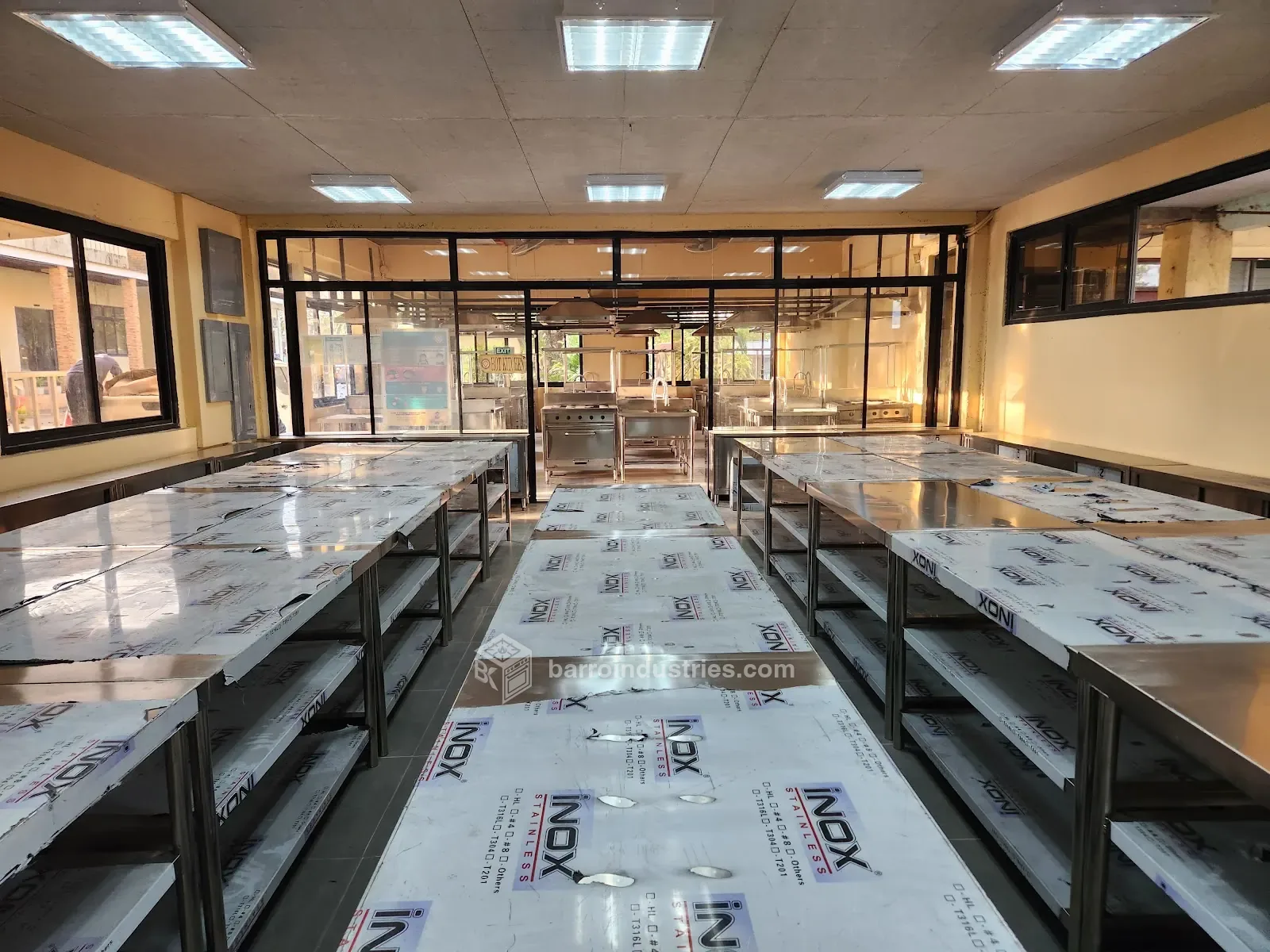
New equipment arrives with a protective film. Peel it off every surface once the piece is installed and before it is used near heat, because film left beside a burner can bake on. Wipe off any glue left behind with warm soapy water.
What not to use on stainless steel
- Chlorine bleach and chlorine-based cleaners. Chlorides attack the protective film and cause pitting, even when diluted. If your sanitiser contains chlorine, follow its label, rinse thoroughly and dry the steel straight away.
- Hydrochloric (muriatic) acid and tile or toilet cleaners. They do the same damage. Keep them off stainless steel, including splashes.
- Steel wool, wire brushes, abrasive pads and scouring powder. They scratch the surface and can leave steel particles that rust. Use a soft cloth or a nylon pad.
- Carbon-steel tools, cast-iron pans and ordinary steel racks left on wet steel. They leave rust-coloured marks.
- Salty or acidic food left standing. Brine, fish sauce, soy sauce, vinegar, calamansi and tomato should be rinsed off promptly.
- Wet cloths, sponges and mats left on the surface. Trapped water leaves marks.
Cleaning along the grain
Brushed and satin finishes have a visible grain of fine parallel lines. Always wipe, scrub and rinse in the direction of the lines. Rubbing across the grain leaves scratches that catch dirt and show up. A mirror finish has no grain but marks easily, so use a clean, soft microfibre cloth, wipe off the cleaner and buff it dry. Test a new cleaner on a small, hidden spot first.
Rust prevention in humid and coastal kitchens
In a humid or coastal kitchen, the usual complaint is tea staining: a brown discolouration of the surface rather than deep rust. Salt in the air, damp and cooking steam settle on the steel, and spots form if they are left. Caught early, it is mostly cosmetic.
- Wipe a stain along the grain with a non-abrasive stainless-steel cleaner, or a paste of baking soda and water. Rinse and dry.
- Near the sea, rinse the steel with fresh water every week and dry it.
- Keep air moving. A working hood and a fresh-air supply carry away damp and steam. See our exhaust hood guide.
- Mop floor water away from the feet of tables, sinks and racks, so water does not pool at the seams.
- If a rust spot will not wipe off, stop scrubbing and message us with a photo.
SS304 or SS316 near the sea
SS304 is the food-grade standard for kitchens, and with this routine it suits most sites. SS316 contains molybdenum, which resists chlorides better, so it is worth considering for a kitchen close to the sea, one often splashed with salt or chemical cleaners, or a laboratory. We make SS316 on request: say so when you message us or send a project brief. Our SS304 vs SS316 guide explains the difference. The care stays the same for both grades, and SS316 does not replace cleaning.
Passivation basics
Passivation is a chemical treatment, usually a mild acid wash, that removes loose iron and other contamination from stainless steel so that the protective film forms evenly. It is done in a workshop after fabrication or repair, not with everyday kitchen chemicals. In the kitchen, a clean, dry, unscratched surface rebuilds its own film from the air. If a surface has been scratched by ordinary steel, or has rust spots that will not clean off, do not experiment with strong acids. Message us and describe it.
How Barro Industries can help
Care is easier when the steel is made well. We make sinks, work tables, dish tables, shelving and racks to your size in food-grade SS304 as standard, or laboratory-grade SS316 on request, and see our other services for the rest of the kitchen.
We give a 6-month service warranty on our equipment and work, and full-kitchen projects include 12 months of preventive maintenance service (PMS) with KitchenShield™. To start a project, tell us what you need and we will come back with a quotation.
Frequently asked questions
How do you clean stainless steel kitchen equipment every day?
Scrape off food, then wash with warm water, mild detergent and a soft cloth, wiping along the grain. Rinse with clean water and dry the surface, especially around sinks, seams and feet. Dry steel stays bright, and standing water leaves marks.
Can I use bleach on stainless steel?
Avoid chlorine bleach and chlorine-based cleaners. Chlorides attack the protective film and cause pitting and rust spots, even when diluted. If your sanitiser contains chlorine, follow its label, rinse thoroughly and dry the steel straight away.
Why is my stainless steel rusting or getting brown stains?
Brown tea staining is common in humid and coastal kitchens and usually wipes off early with a non-abrasive cleaner, along the grain. Rust marks often come from salt, bleach, steel wool or ordinary steel left on wet stainless steel. Clean them early and keep the surface dry. If spots return, message us.
Do I need SS316 near the sea?
Not always, but SS316 resists salt better than SS304 and is worth asking for in a kitchen close to the sea or one exposed to chemical cleaners. SS304 food grade is our standard, and SS316 is available on request. Either grade lasts longest when it is kept clean and dry.
What warranty and maintenance do you give?
We give a 6-month service warranty on our equipment and work, and full-kitchen projects include 12 months of preventive maintenance service (PMS) with KitchenShield™. Send a project brief or message us to find out what suits your kitchen.
© 2026 Barro Industries OPC. All rights reserved. All text, photographs and designs on this page are our own work and may not be copied or reused without written permission.