
In short
- A hood is one part of a path: canopy, baffle filters, ducting, exhaust blower and a fresh-air supply. Plan the parts together.
- Make the canopy longer and deeper than the cooking line under it. Choose a wall, island or slim canopy to suit your room.
- Clean the filters and the grease trough often, keep the duct reachable, and make sure the kitchen is not starved of fresh air.
What a commercial kitchen exhaust hood does
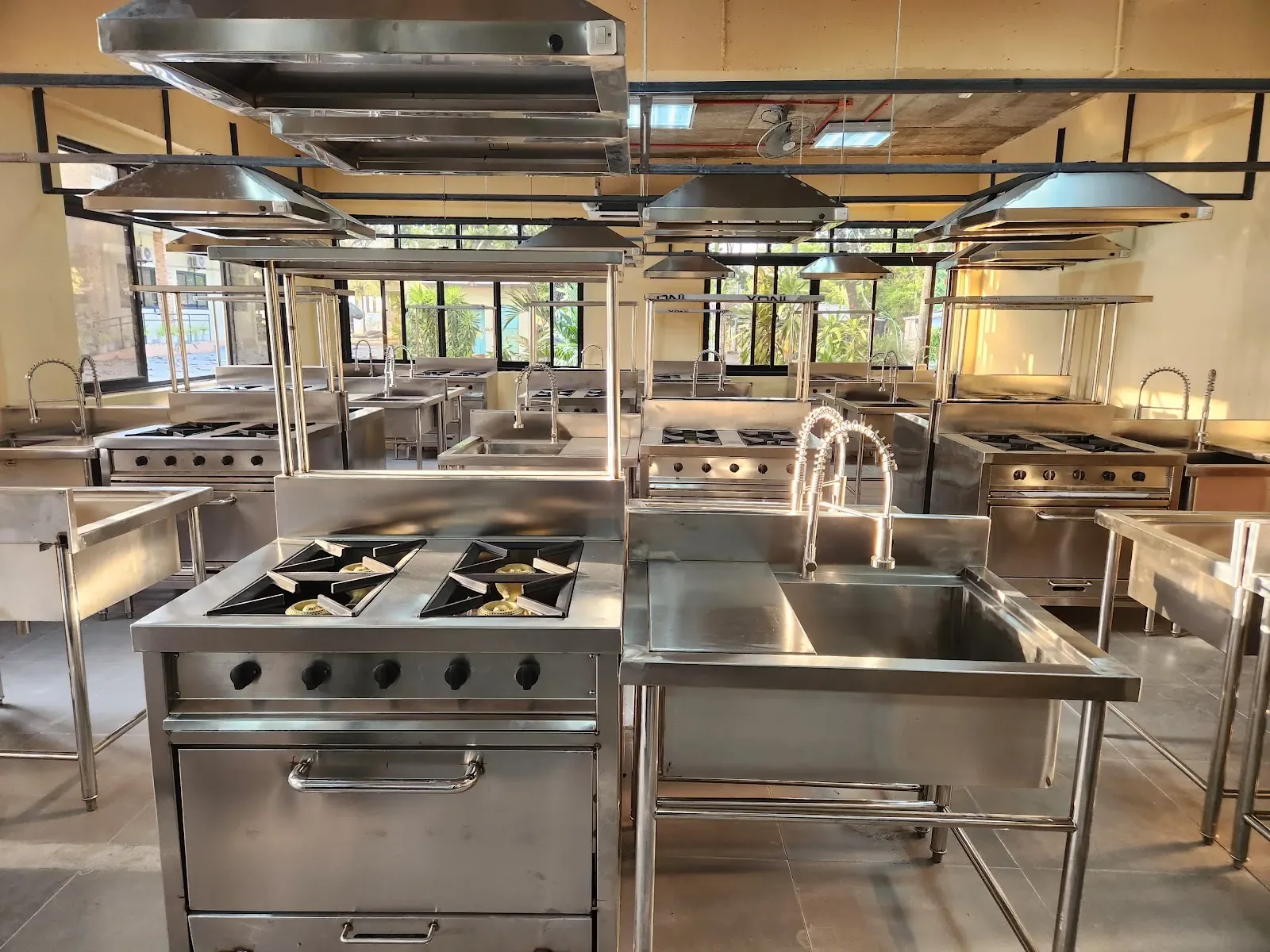
Gas ranges, wok ranges, griddles and fryers give off heat, steam, smoke and grease. A commercial kitchen exhaust hood is the stainless-steel canopy over the cooking line that catches them and sends them through a duct to the outside.
The hood is the first part of a path: canopy, baffle filters, ducting, exhaust blower, and a fresh-air supply that replaces the air which leaves. If one part is wrong, the others cannot make up for it. We plan the parts as one system, as our exhaust and fresh-air systems page describes, and our range hoods page lists what you can choose.
Sizing the canopy
Rising heat and smoke drift sideways before they are drawn in, so the canopy must be larger than the equipment below it. These are rules of thumb for planning, not codes:
- Length. Cover the whole cooking line and extend about 150 mm past the equipment at each open end. Many designers go further for heavy cooking.
- Depth. Reach over the front of the equipment as well as the back, so the front burners are covered. Our made-to-order wall canopies are at least 500 mm deep, and our island canopies at least 1200 mm long and 700 mm deep.
- Height. The lower edge should be high enough to work under and low enough to catch the plume; a common rule of thumb puts it at around 2 metres above the floor. Your designer will fit it to your ceiling and your equipment.
What you cook matters too. A wok range, a griddle, a griller or a fryer (see our griddles, grillers and fryers) makes far more heat and grease than a steamer, so tell your designer what stands on the line. Keep draughts from doors and fans away from the canopy edge.
Wall, island or slim canopy
Wall canopy
Fixed to a wall, which closes the back. It captures smoke well and suits a line along a wall.
Island canopy
Open on all four sides over a cooking block. Draughts reach it from every side, so it generally needs more extraction and overhang than a wall canopy.
Slim canopy
A low-profile canopy for a low ceiling or a counter line. Ours is no deeper than 500 mm, so check that it covers the equipment.
Our hoods are welded, with a grease trough and oil cup, in food-grade SS304 as standard or laboratory-grade SS316 on request.
Baffle filters and grease
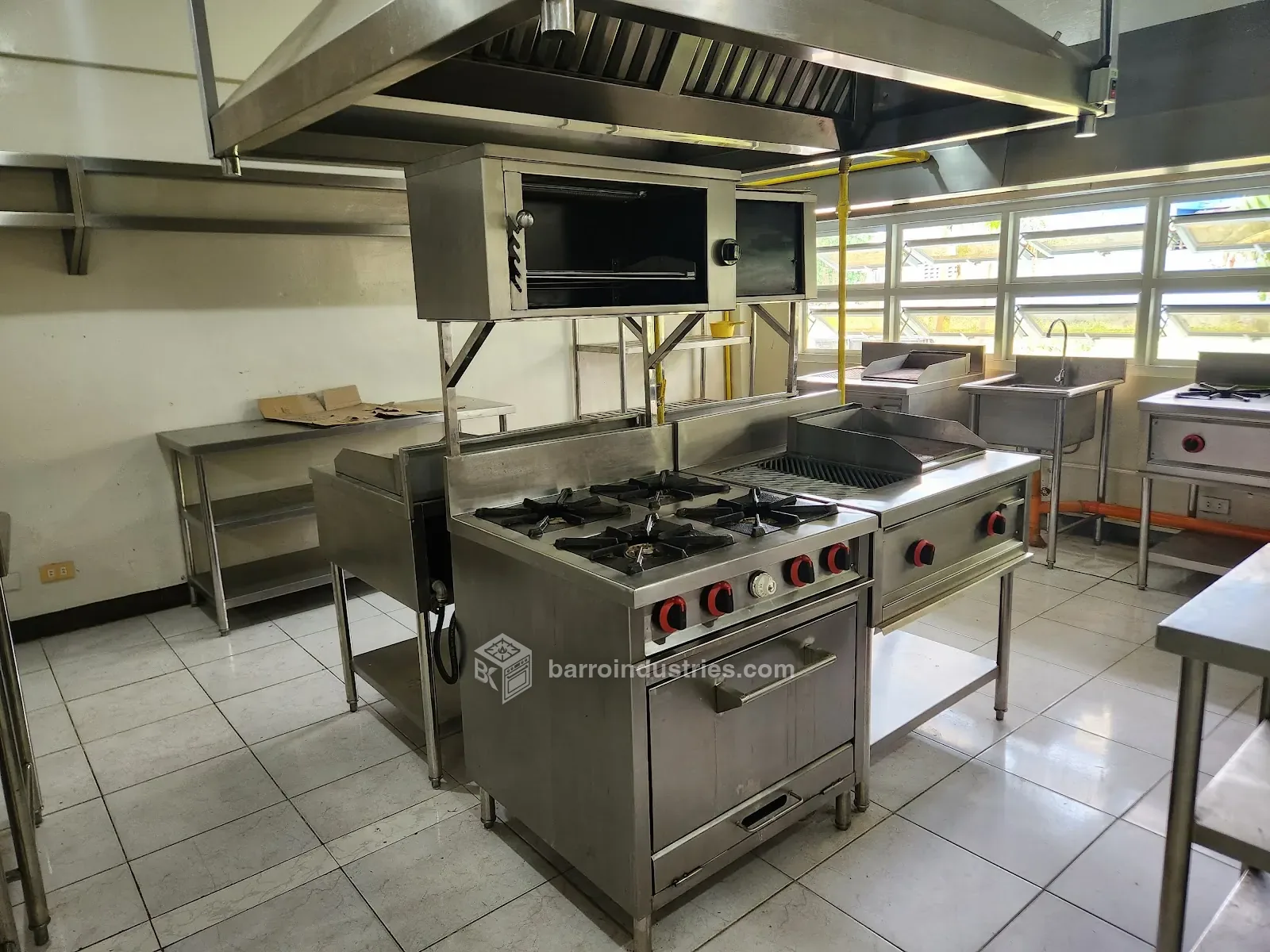
Baffle filters are rows of stainless-steel slats set in the canopy. Air has to change direction as it passes through them, so grease strikes the slats and runs down into the grease trough and oil cup instead of reaching the duct. They are the main protection against grease building up in your ducting, which is a fire risk.
- Never run the hood with its filters removed, and refit them the way they were made to sit so that grease drains to the trough.
- Clean them often. How often depends on your menu: a line that fries or woks all day needs far more attention than one that mostly steams or bakes.
- Empty the grease trough and oil cup as they fill, daily on a busy line.
Ducting and the exhaust blower
The exhaust duct carries the greasy air outside, so plan its route early. Keep it as short and straight as the building allows, because every bend slows the air and gives grease another place to settle. Our exhaust ducting is fully welded, with an access door so the inside can be inspected and cleaned.
The exhaust blower pulls the air through, and it is sized for the hood and the duct together. Too small, and smoke spills over the canopy edge. Too large, and it wastes power and drags in more air than the kitchen can replace. Ask for the size to be worked out, not guessed.
Discharge away from windows, fresh-air intakes and your neighbours, and keep the blower reachable for servicing. Ask the Bureau of Fire Protection (BFP) and the city or municipal building office what applies to your building.
Makeup air: fresh air in, hot air out
A hood removes air, and that air has to come from somewhere. If nothing replaces it, the hood loses strength, doors stick or slam, and gas flames flicker or burn yellow. A fresh-air system, with its own blower and ducting, brings replacement air in through room diffusers or through the hood itself.
The signs of a starved kitchen are smoke spilling at the canopy edge, a whistling or sticking door, and leaning flames. As a rule of thumb, most of the air you extract should come from a dedicated supply, not from the dining room.
Fire suppression and upkeep
Grease is fuel. A wet chemical fire suppression system integrated with the hood protects the cooking surface and the exhaust path, so design it with the hood. Ask the BFP what it expects before the drawings are fixed. The gas appliances below need a sound LPG gas line too.
| Part | Typical care |
|---|---|
| Grease trough and oil cup | Empty as they fill, daily on a busy line. |
| Baffle filters | Wash weekly, or more often for heavy frying. |
| Duct | Inspect through the access door and have it cleaned by a specialist, at intervals set by how much you cook. |
| Blower | Listen for new noise or vibration, and service it on a schedule. |
How Barro Industries can help
Our exhaust and fresh-air systems service starts with a consultation and a site visit. We design, fabricate, deliver, install and commission the hood, ducting, blowers and fresh-air supply, with fire suppression integrated.
The quickest way to start is the project brief. List your cooking line and measure the room, including the ceiling height and where the duct can leave the building. We give a 6-month service warranty on our equipment and work, and full-kitchen projects include 12 months of preventive maintenance service (PMS) with KitchenShield™.
Frequently asked questions
How big should a commercial kitchen exhaust hood be?
Longer and deeper than the cooking line under it. A common rule of thumb is about 150 mm of overhang beyond the equipment at each open end, with the canopy reaching over the front burners. The right size also depends on what you cook, so send us your equipment list and room measurements.
Should I choose a wall canopy or an island canopy?
A wall canopy, closed at the back, suits a cooking line against a wall. An island canopy is for a cooking block open on all four sides and generally needs more extraction. A slim canopy fits a low ceiling. We check which suits your room on the layout.
How often should baffle filters be cleaned?
It depends on what you cook. Many kitchens wash them weekly, and a line that fries or woks all day may need it more often. Never run the hood without its filters. Ask us for a routine that matches your menu.
Does a kitchen exhaust hood need fresh air?
Yes. Air pulled out must be replaced, or smoke spills over the canopy, doors stick and gas flames flicker. We plan a fresh-air supply, with its own blower and diffusers, together with the hood and the exhaust.
Can you supply and install a kitchen exhaust hood?
Yes. We make stainless-steel hoods to your size, and we design, fabricate, deliver and install the hood, ducting, blowers and fresh-air supply as one system, with fire suppression integrated. Send a project brief or message us to start.
© 2026 Barro Industries OPC. All rights reserved. All text, photographs and designs on this page are our own work and may not be copied or reused without written permission.